Home / Guides / How to read a record / Is the maple economy also a fuel break
Is the maple economy also a fuel break
The maple is a hardwood listing. It is not Vermont’s fire table, and it is not Zone 0. Vermont FPR: the majority of Vermont wildland fires burn in spring, after snowmelt, in dead grasses, leaves, and twigs, generally between the end of March and the beginning of June. Spring fires seldom burn deeply. 2025 statistics: 84 fires, 66.33 acres; ten-year average 77.5 fires and 124.1 acres. Opened FPR pages say the department distributes firewise/defensible space literature. They do not print a Vermont species table. Acer saccharum currently computes as on-list and includes VT.
You are looking at a sugarbush from the evaporator and calling the canopy a fuel break. FPR’s season is leaf-off litter and debris burning. Connecticut’s 500-acre average is the same class of mix-up: small acres are not a planting permit at the wall.
This is not a Vermont doorway.
Why it matters
A sugarbush is a working forest. Defensible space is the first feet around a house. FPR can hand out Firewise literature and still not rate sugar maple. Hardwood lists that call maple low-flammability are measuring green leaves, not April litter. Embers still land in that litter. Fire-resistant is not fireproof.
This site’s Vermont plant evidence currently holds 424 USDA-distribution records (258 on-list, 37 avoid, 9 conflict, 120 candidate). That is occurrence.
How it works
What FPR actually printed:
- Seasons: grass, brush, and forest fuels every year. Most fires in spring. Summer or fall in a dry year.
- Spring: after snowmelt. Dead grasses, leaves, twigs. Winter clean-up and debris burning. End of March to beginning of June. Southern counties, low elevations, and south slopes dry first. Mud limits access. Seldom burn deeply.
- Summer: after green-up. Woods may look green and damp while ground fuels and litter are dry enough to burn. Campfires, logging, lightning. Mid- to late August into September. Slower spread except in softwood areas. Dry duff makes mop-up expensive.
- Fall: after leaf drop. Late September to the end of November, usually ending with snow.
- Prevention (
/prevent-forest-fires-0): Town Forest Fire Warden Permit to Kindle Fire. Education includes firewise/defensible space literature and Smokey Bear. NWS Burlington open-burning weather week. Burn bans when fuels stay hazardous until rain or green-up. - Wildland hub: suppression with wardens, departments, the Northeast Forest Fire Protection Commission. No plant table.
2025 numbers (opened PDF):
- 84 fires, 66.33 acres.
- Human 63 / 33.60. Undetermined 17 / 31.93. Lightning 4 / 0.8.
- Green Mountain National Forest printed separately: 20 / 3.4.
- Ten-year average 77.5 fires, 124.1 acres, 1.48 acres per fire.
- Leading 2025 cause by count: debris burning, 28 fires, 18.31 acres.
- July/August 2025: 22 fires, 18.19 acres. The PDF: roughly 12× acreage and 6× occurrence versus the previous 20-year July/August average.
This directory:
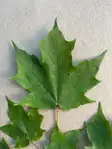
- Acer saccharum on-list, VT. Stored recommend rows include PNW 590, Bardon 2005 Low, Virginia Firescapes L, OSU B921 L, and MSU E2948. B921 and 430-300 share a rater. See the Steward rule. FPR did not write those rows.
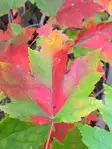
- Acer rubrum, Acer pensylvanicum, and Acer spicatum currently compute as on-list and include VT.
- None of those badges are a Vermont FPR listing.
See how to read a plant page and which canopy trees earn their keep. 1947 in Maine is the Northeast reminder that a hardwood landscape can still carry fire.
The paths
| Claim | Opened source | What it is not |
|---|---|---|
| Most fires in spring leaf-off | FPR seasons page | A summer canopy as the fire season |
| Seldom burn deeply in spring | FPR seasons | A house that cannot ignite |
| Firewise literature | Prevent Forest Fires (-0) | A Vermont species table |
| 84 fires / 66.33 acres in 2025 | FPR statistics PDF | A zero-fire maple state |
| 22 July/August fires in 2025 | Same PDF, 12× / 6× note | Proof that green-up ends the year |
| A. saccharum on-list | Stored lineages on the plant page | An FPR rating |
| 424 Vermont records | USDA distribution | An FPR Firewise list |
What people mix up
- A sugarbush with defensible space. One is sap. The other is the wall.
- Summer maple leaves with April litter, which is when FPR says most fires burn.
- FPR’s Firewise literature clause with a plant list. The opened pages do not name Acer.
- 424 USDA rows as a thick Vermont palette. See when almost nothing is rated for your state.
- Ten-year average acres (124) as “nothing happens.” Connecticut already ran that sentence.
- B921 and Virginia Firescapes as two Steward votes for maple.
- Adding the Green Mountain National Forest line (20 / 3.4) into the 84 / 66.33 total. The PDF prints it separately.
- Zone 0 as a maple cultivar.
How to check
- Open Vermont’s Wildland Fire Seasons. Read majority in spring, end of March to beginning of June, seldom burn deeply.
- Open Prevent Forest Fires. Read firewise/defensible space literature. Look for a species table. There is not one.
- Open the 2025 statistics PDF. Read 84, 66.33, debris burning 28, July/August 22.
- Open Acer saccharum. Read the stored lineages. FPR is not one of them.
- Open Vermont plant evidence.
- Do not plant in Zone 0.
Limits
This page quotes opened FPR HTML (seasons, wildland hub, /prevent-forest-fires-0) and the opened 2025 statistics PDF. The /prevent-forest-fires twin was opened and does not include the firewise/defensible space clause; quotes of that phrase use the -0 URL. FPR did not print a 20-year July/August mean on the PDF, only the roughly 12× and 6× comparisons; those multipliers are not recomputed here. 424 is a count of stored USDA-distribution rows as of this writing. Maple syrup production figures were not opened and are not quoted. The Vermont Urban & Community Forestry tree-selection guide was not opened and is not a fire list. Zone 0 is not a planting list.
Related records
- Acer saccharum
- Acer rubrum
- Acer pensylvanicum
- Acer spicatum
- Vermont plant evidence
- Fire risk is low here. Why does plant choice still matter
- Could the 1947 Maine fires happen again
- Which canopy trees earn their keep
- How to read a plant page
- When almost nothing is rated for your state
- The Steward rule
- Zone 0
Plant records this page rests on
Questions
Is a sugarbush a fuel break around the house?
Not on the opened Vermont FPR pages. FPR’s wildland-fire season page says the majority of Vermont wildland fires burn in spring, after snowmelt, in dead grasses, leaves, and twigs, generally between the end of March and the beginning of June, when deciduous trees are not in leaf. A tapped maple stand is a forest product. It is not Zone 0, and it is not a Vermont Firewise table.
Does Vermont print a Firewise plant list?
The opened FPR wildland, prevention, seasons, and 2025 statistics pages do not. Prevent Forest Fires says FPR distributes firewise/defensible space literature with Smokey Bear materials. That is outreach, not a species table. This site’s Vermont plant evidence page currently holds 424 USDA-distribution records. That is occurrence, not an FPR rating.
Did 2025 stay a quiet maple summer?
FPR’s 2025 statistics PDF: 84 fires and 66.33 acres statewide; 10-year average 77.5 fires and 124.1 acres. Debris burning was the leading 2025 cause by fire count (28 fires, 18.31 acres). The same PDF says 2025 July/August acreage was roughly 12 times higher and fire occurrence roughly 6 times higher than the previous 20-year average, with 22 July/August fires and 18.19 acres. FPR’s seasons page already warned that summer ground fuels can be dry even when the woods look green.
Is sugar maple on-list because Vermont listed it?
No. Acer saccharum currently computes as on-list from stored lineages that include PNW 590, Bardon 2005 (Low), Virginia Firescapes (L), OSU B921 (L), and MSU E2948. FPR did not add a Vermont row. B921 and Virginia Firescapes share a rater. See the Steward rule.
Is this a Vermont doorway page?
No. The object is spring leaf-off fire versus maple as a stored hardwood listing. Place claims sit on whereThisDiffers. The Vermont plant evidence list is USDA distribution, not this article.